
👥 Unit 1: Early Civilisations
Sub unit 3: Early Chinese civilisation
Origin and Geography:
- Chinese civilisation began around 1500 BCE.
- It originated along the banks of the Huang He (Yellow River).
- Initial Development/External Influence:
- The onset of civilisation is attributed to invaders from the North West.
- These invaders brought key ideas, including:
- Wheat and barley cultivation
- Casting of bronze
- Writing
- Use of horses
- Because these techniques originated in Mesopotamia, it is concluded that the early Chinese civilisation was influenced by the Sumerians.
The Classical Period Dynasties:
- The classical period was ruled by three major dynasties: The Chou, the Ch'in, and the Han.
- The Chou dynasty was the longest, lasting from 1027 BCE to 256 BCE.
Government and Administration:
- These dynasties established a strong centralized system of government.
- This system ensured the stability and growth of the kingdom.
- The kingdom was divided into provinces which were administered by bureaus or departments responsible directly to the emperor.
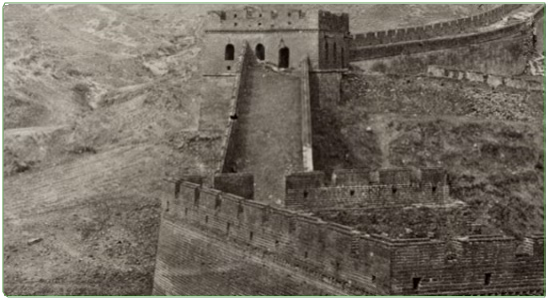
Fig 1.4: The Great Wall of China
Source 1.3: “For four generations now, Qin has won victory. Its armies are the strongest in the world and its authority sways the other feudal lords. It did not reach this position by benevolence and righteousness, but by taking advantage of its opportunities. That’s all. From Li Si Records-Chief Minister to Qin Shi Huangdi. (Paludan, 2008, p.20)
Read the source above and answer the following questions.
- From the source above, identify the factors that led to the growth of Ancient Chinese civilisation.
- Describe the roles of the rulers of dynasties in the Chinese civilisation with reference to the source above.
The achievements of the Chinese civilisation
Technology and Inventions:
- Developed and emphasized technology and arts.
- Invented numerous items still in use today, including:
- Paper
- Silk
- Rubber
- Wheelbarrows
- The most significant invention was gunpowder, which was used extensively in wars.
- Invented fireworks, originally for shows and later used to scare enemies.
Trade and Economy:
- Established the Silk Road, a network of trade routes connecting the East and the West.
- The route was named for the trade of silk, but also included commodities like gold, ivory, weapons, and other inventions.
- The Silk Road was vital for easy trade and the development of the Chinese empires.
Engineering and Defence:
- Constructed the Great Wall of China, beginning in the 7th century BCE.
- The Wall's primary function was to keep enemies away from the north.
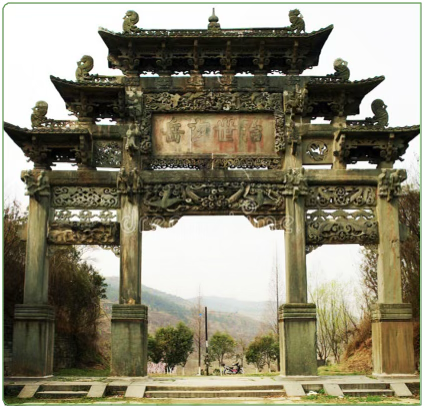
Fig 1.5: Chinese architecture
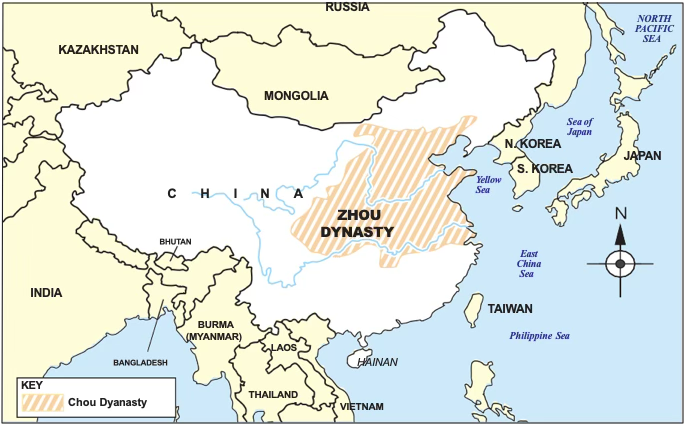
Fig 1.6: Map of Ancient Chinese showing early empires
Ancient China is known to have probably started the growing of crops such as rice, wheat, corns, soya beans and other tuber crops. They used wooden tools to store their crops.
Ancient China had a great wall that protected it from foreign invaders. Do you think African countries should also build walls on their borders? Explain your answer.
The collapse of the early Chinese civilisation
Final Event: The civilisation largely collapsed with the downfall of the Han Dynasty in 220 A. D.
- This was triggered when the weak Han Empire was swept over by Barbarians from the North West who breached the Great Wall.
- This was followed by 400 years of civil disorder before the rise of the T'ang Dynasty.
Contributing Factors:
- Population Decrease: A shrinking population weakened the empires and reduced the revenue needed to sustain the government.
- Weak Central Government: This made the empire vulnerable, facilitating the Hun invasion (likely referring to the Barbarian invasion), which left the civilisation too weak to continue.
- Social and Economic Strife: The practice of overtaxing peasants led to social unrest and made the population easier to subjugate.
- Weak Dynasties: The later Sui and T'ang Dynasties are cited as weak, making the civilisation prone to external attacks.
- Other Internal Factors: A combination of other systemic issues:
- Internal uprisings
- Poor economy
- The dynastic cycle (the trend of dynasties)
- Poverty of the peasants
- Corruption by the rulers